

All
- All
- Product Management
- News and Information
- Introduction content
- Enterprise outlets
- Frequently Asked Questions
- Corporate Video
- Company Portfolio
Operating Principle and Maintenance Methods for Low-Temperature Asphalt Extensometer
2020-05-11
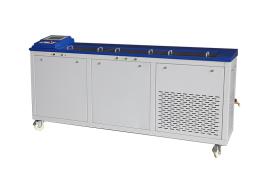
The low-temperature asphalt ductility tester is used to determine the ductility of various types of asphalt, residue remaining after distillation of liquid asphalt, and evaporative residue from asphalt emulsions. It can automatically calculate and display the average ductility value of three specimens, with digital temperature display. The instrument features an LCD screen that shows operating status, time, speed (with adjustable speed setting), force-displacement curves, and specimen elongation. It can also be connected to a printer for data output. After expansion, it can be linked to a computer-based management system. This low-temperature asphalt ductility tester complies with the Ministry of Transport standard JTJ052-2000 and is widely used in production, road construction, research institutions, colleges and universities, and is particularly well-suited for testing modified asphalts.
Main Structure and Working Principle of the Low-Temperature Asphalt Extensometer:
The low-temperature asphalt extensometer consists primarily of a mechanical tensile device, a temperature control unit, and an LCD display section.
1. The mechanical tensile device is driven by a low-speed motor and moves from one end to the other via a transmission system consisting of gears and racks connected through a gearbox. The transmission unit is also equipped with a variable-speed mechanism, allowing for two different tensile speeds: 50 mm/min and 10 mm/min.
2. The temperature control unit consists of a refrigeration system (including a compressor, condenser, fan, etc.) as well as a heater, water pump, and water tank. By means of water circulation driven by the pump, the water temperature in the tank can be maintained at a constant and adjustable level between 5°C and 50°C.
3. The extensometer LCD display can directly show the elongation of three specimens and automatically calculate and display the average elongation of the three samples.
Maintenance methods for low-temperature asphalt ductility tester:
1. After each test, drain the water from the tank completely to prevent corrosion of the metal materials and ensure the accuracy and service life of the instrument.
2. After each test is completed, the asphalt mold must be gently wiped clean with fine gauze, coated with butter, and properly stored in a flat, level location.
3. Please note: Before using the instrument, the instrument case must be properly grounded to prevent interference.
4. Before using the low-temperature asphalt ductility tester, oil should be injected into the oil ports at both ends. If the machine emits any unusual sounds, it should be immediately switched off, the fault should be identified and eliminated, and only then can the machine be restarted.
5. During the tensile test, after starting the machine, close the tensile handle to prevent it from getting stuck. For other operational procedures, please follow the relevant standards.
Relevant Information

The main advantages of the penetration tester are:
The main advantages of the penetration tester are:
2023-11-02

The working principle of the compaction apparatus mainly includes the following points:
The working principle of the compaction apparatus mainly includes the following points:
2023-10-23

The compaction instrument is a device used to measure the bearing capacity of bored pile foundations. Its main features are as follows:
2023-10-13