

All
- All
- Product Management
- News and Information
- Introduction content
- Enterprise outlets
- Frequently Asked Questions
- Corporate Video
- Company Portfolio
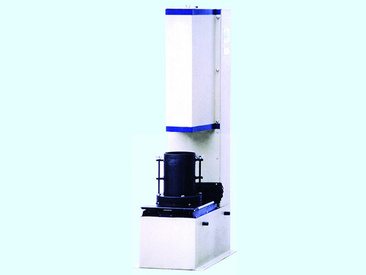
Uses and Maintenance of the Intelligent Tracking Multi-Function Electric Compactor
2020-08-12
The intelligent tracking multi-functional electric compaction apparatus is developed in accordance with the highway testing industry standards issued by the Ministry of Transport. Its structural performance fully meets the compaction test requirements specified in the "Highway Geotechnical Testing Procedures" (TO131-93), including the compaction test for bearing ratio tests (CBR) (TO134-93) and the resilient modulus test (TO135-93). This apparatus features both light compaction and heavy compaction modes.
The intelligent tracking multi-functional electric compactor is primarily used for compaction tests on cement-stabilized soils (before cement hydration) and lime-stabilized soils. The compaction process is driven by an electric motor, which not only reduces the labor intensity of researchers but also enhances the efficiency of the testing process.
Installation method:
After unpacking, loosen the bolts securing the base, clean all parts of the instrument, and place the instrument onto the foundation bolts. Using a spirit level as a reference, adjust the instrument so that the working surface achieves a deviation of no more than 0.3% in both horizontal and vertical directions. Then, tighten the foundation bolts to securely fasten the instrument.
How to Perform a Compaction Test:
1. First, check the three power cords and inspect the instrument’s power switch as well as all parts of the counter. Tighten the screws on all components of the test cylinder. Then, connect the power supply and press the jog button to observe the direction of the rack’s movement. If the rack moves upward, it indicates forward rotation; reverse rotation is strictly prohibited.
2. Check whether the compaction hammer is at the bottom of the test cylinder. If the compaction hammer is not at the bottom, press the jog button to allow the compaction hammer to fall to the bottom of the test cylinder. Otherwise, after the compaction hammer is lifted, it won’t be able to fall back down.
3. Check the clearance between the compaction hammer and the wall of the test cylinder (typically 3–5 mm), ensuring that the hammer does not strike the cylinder wall.
4. Set the required number of compaction blows.
5. Press the start button to begin operation. The digital display on the panel will increment with each hammer strike and automatically stop once it reaches the preset target value—thus completing one operational cycle.
6. If it’s a heavy strike, you can repeat the above procedure.
Equipment Maintenance and Servicing:
1. After each experiment, be sure to clean the machine thoroughly. Lubricate the test cylinder and the rack with machine oil, and then disconnect the power supply (reconnect it only when you’re ready to start working again).
2. Regularly inspect fasteners and tighten them promptly if any looseness is detected.
3. For rotating parts, lubricate once every three months. If the equipment is used frequently, adjust the lubrication interval accordingly and lubricate more often as needed.
Relevant Information

The main advantages of the penetration tester are:
The main advantages of the penetration tester are:
2023-11-02

The working principle of the compaction apparatus mainly includes the following points:
The working principle of the compaction apparatus mainly includes the following points:
2023-10-23

The compaction instrument is a device used to measure the bearing capacity of bored pile foundations. Its main features are as follows:
2023-10-13